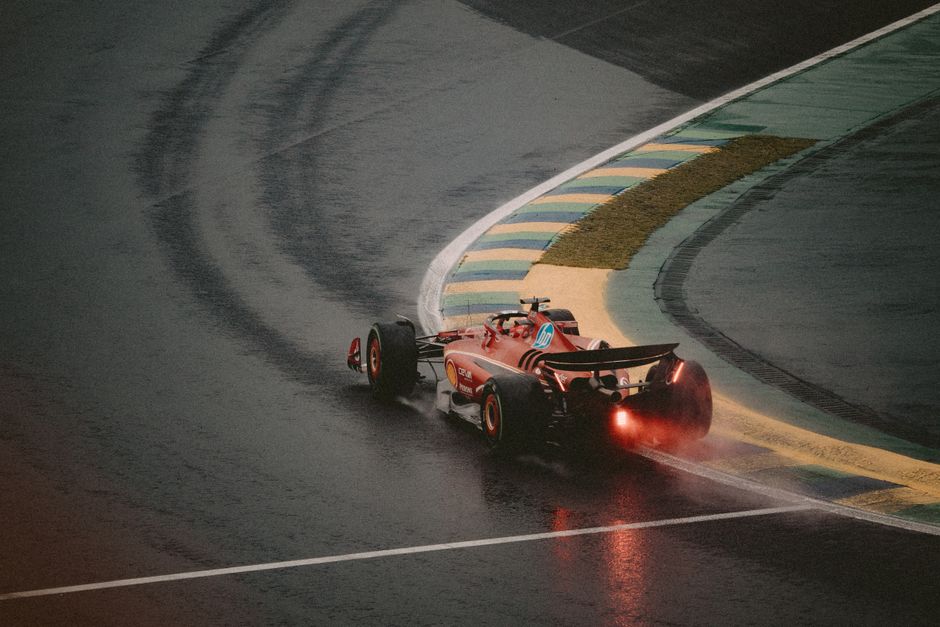
How to Master Trail Braking on a Wet Track
Trail braking is a technique commonly used in motorsport to combine braking and turning into a single, fluid motion. On dry asphalt, the method helps rotate the car into corners and improves entry speed. On a wet track, where grip levels are significantly reduced, trail braking takes on an even more important role. The lower coefficient of friction means that any sudden or abrupt input can easily exceed the available traction, leading to understeer or loss of control. Understanding how to modulate brake pressure while steering becomes essential for maintaining stability.
The wet surface changes the way a vehicle responds to weight transfer. When the brakes are applied, weight shifts forward, increasing the load on the front tires. If the driver releases the brakes too quickly or too late, the front end may slide wide, causing understeer. Trail braking, when performed with smooth and progressive inputs, allows the driver to keep the front tires loaded through the initial phase of the corner, improving turn‑in response. This article explores the principles behind trail braking on wet asphalt and describes a structured approach to developing this skill.
The focus is on understanding the underlying dynamics rather than guaranteeing specific outcomes. Every vehicle, tire compound, and track condition introduces variables that influence braking behavior. The information presented here is intended to provide a framework that drivers can adapt to their own context, always relying on professional judgment and real‑world practice.
Understanding Traction and Braking Dynamics on Wet Surfaces
Traction on a wet track depends on several factors, including the tire compound, tread pattern, water depth, and surface texture. When water is present, the tire must displace the film of water to make contact with the asphalt. At higher speeds, hydroplaning becomes a risk if the tire cannot evacuate water fast enough. Braking in these conditions requires a more cautious approach because the peak braking force is lower and the threshold of lockup is narrower.
Weight transfer plays a central role in how braking affects cornering. When the driver applies the brakes, the rear of the car rises and the front suspension compresses. This increased vertical load on the front tires improves their ability to generate lateral grip, but only up to a point. If braking is too aggressive, the rear tires become light and can lose lateral grip, leading to oversteer. On a wet surface, the margin between optimal braking and exceeding traction is smaller. Trail braking leverages this weight transfer by maintaining some brake pressure as the steering input begins. This keeps the front tires loaded and helps the car respond to steering commands even on a low‑grip surface.
The concept of the friction circle is useful for visualizing how braking and cornering forces interact. In dry conditions, a tire can handle a certain combination of longitudinal and lateral forces. In the wet, the radius of that circle shrinks. A driver who understands this reduction can plan brake release and steering inputs to stay within the available grip. Trail braking on wet asphalt is essentially a method of smoothly moving from the braking phase into the cornering phase without exceeding the combined limit of the tires.
The Core Technique of Trail Braking on Wet Tracks
Trail braking begins in the braking zone before the corner. The driver applies the brakes in a straight line, then gradually reduces brake pressure as the steering wheel is turned. The key is that some brake pressure remains after the turn‑in point. This residual braking force continues to transfer weight forward, keeping the front tires pressed into the road. On a wet track, the rate at which the brake pressure is released must be slower and more linear than on a dry surface.
A common approach is to start braking earlier than usual and with a lighter initial pedal force. Because the tires have less grip, heavy braking can lock the wheels or cause the anti‑lock brakes to cycle excessively. By beginning the braking phase earlier, the driver has more time to modulate pressure and find the limit of traction. As the car approaches the turn‑in point, the driver begins to unwind the brakes while simultaneously starting to rotate the steering wheel. The overlap between braking and steering should be smooth and deliberate. Abrupt lifting of the brake pedal can cause a sudden weight transfer to the rear, reducing front grip and leading to understeer.
The amount of brake pressure retained during the turn‑in phase typically ranges from ten to thirty percent of maximum braking, depending on corner radius and grip level. In wet conditions, the lower end of that range is often more appropriate. Drivers can practice this by focusing on the sensation of the front tires biting into the corner rather than by monitoring specific pressure values. The goal is to feel the car rotate slightly as the brake is gradually released, not to force a rotation through aggressive steering.
Adjusting Brake and Steering Inputs for Wet Surfaces
Wet tracks demand even greater care in how inputs are applied. Any sudden change in pedal pressure or steering angle can upset the car’s balance. When trail braking in the rain, a driver should use a smoother and more extended release profile. Instead of trailing the brake to a zero point just before the apex, the release may continue past the apex in some corners. This keeps the front loaded longer, helping to maintain a stable line on a slippery surface.
Steering inputs should also be gentler. Fast, jerky steering movements can cause the front tires to lose grip instantly, especially if combined with even moderate braking. A deliberate, progressive steering motion allows the tires to gradually build up lateral force. The driver should aim to feed in steering angle as the brake pressure decreases, maintaining a consistent relationship between the two. On wet asphalt, this relationship becomes more linear; the rate of brake release and the rate of steering input should be closely matched to keep the car within the friction circle.
It is also important to adjust the entry speed. Trail braking does not compensate for entering a corner too fast. On a wet track, the margin for error is so small that even a slight excess in entry speed can overwhelm the tires. Drivers often find that reducing entry speed by a few miles per hour gives them the confidence to apply trail braking more effectively. The technique then becomes a tool for fine‑tuning the car’s attitude rather than a way to brake later.
Practicing Trail Braking in Wet Conditions
Developing proficiency in wet‑weather trail braking requires a structured practice routine. Drivers can begin on a dry track to build the basic muscle memory of brake‑steer coordination. Once the movements feel natural, moving to a wet track or a wet skid pad provides a safe environment to explore the lower grip regime. The initial goal is not to set fast lap times, but to develop a sensitivity to how the car responds when grip is reduced.
A useful drill is to brake in a straight line on a wet surface and observe the threshold of lockup. By deliberately inducing a slight lockup or ABS activation, the driver learns the maximum braking force available. Then, on a gentle corner, the driver can practice trailing the brakes with a slow, deliberate release. The focus should be on maintaining a constant steering angle while varying the brake pressure to feel how the car’s nose moves. Over several laps, the driver can gradually increase corner speed while keeping the release smooth.
Another method involves using a section of track with a known corner radius and measuring the time between turn‑in and apex. By comparing dry and wet times, the driver can identify how much slower the entry must be to allow safe trail braking. Professional coaches often recommend recording on‑board video and data logs to compare brake pressure traces. These tools allow the driver to see whether the brake release is too abrupt or if the trail phase ends too early. Consistent practice with feedback helps refine the technique without relying on guesswork.
Common Challenges and How to Approach Them
One of the most frequent difficulties when trail braking on a wet track is managing rear‑wheel lockup. Because weight transfers forward, the rear tires become lighter. If the driver braked heavily and then releases the brakes too quickly, the rear could step out. A smoother release and slightly earlier brake initiation help mitigate this risk. Drivers should also be aware that different corners require different trail braking techniques. High‑speed sweepers may benefit from a very light trail, while tight hairpins may need a more pronounced but still gentle application.
Another common issue is over‑reliance on trail braking to correct a poor entry line. If the car is pointed too wide at turn‑in, applying extra brake while turning may cause the front to slide rather than tuck in. The proper response is to accept a slightly wider line and reduce speed first, then apply trail braking on subsequent laps. The technique is a tool for optimizing an already decent line, not for rescuing a misjudged approach. In wet conditions, patience becomes as important as technique.
Drivers also sometimes struggle with consistent feel due to changing water levels on the track. A puddle or a drying line alters grip from corner to corner. In such conditions, trail braking must be adapted dynamically. A driver may choose to avoid trail braking entirely on a corner that is known to have standing water. The ability to recognize when the technique is unsafe is a critical part of mastering it. The ultimate goal is to use trail braking as a flexible option, not a rigid rule.