Why Tire Temperature Matters in Endurance Racing
Endurance racing presents a unique set of challenges that differ significantly from sprint racing. Among the most critical variables influencing performance and reliability is tire temperature. Unlike short races where tire warm-up is a brief phase, endurance events demand consistent thermal management over extended periods. Tire temperature directly affects grip levels, wear rates, and the overall behavior of the car. Understanding how temperature interacts with tire compounds and track conditions is essential for teams aiming to maintain competitiveness across long stints.
This article explores the relationship between tire temperature, grip, and wear in the context of endurance racing. It outlines the optimal temperature windows for different tire compounds and discusses the factors that influence tire thermal behavior. The focus is on the underlying principles and methods used to monitor and manage tire temperature, rather than on prescribing specific outcomes. By examining these aspects, teams and drivers can develop a more informed approach to tire strategy during endurance events.
The Relationship Between Tire Temperature and Grip
Tire grip in endurance racing is heavily dependent on the temperature of the rubber in contact with the track surface. As tires roll, internal friction and deformation generate heat. This heat raises the temperature of the tread compound, altering its mechanical properties. Within a specific temperature range, the rubber becomes more compliant, allowing it to conform to surface irregularities and generate higher friction. Outside this range, grip diminishes.
When a tire is too cold, the rubber remains relatively stiff and does not deform enough to create maximum contact area. This results in reduced lateral and longitudinal grip. Drivers may experience understeer or oversteer, and braking distances can increase. Conversely, when a tire overheats, the rubber becomes too soft and begins to lose structural integrity. The surface may start to degrade through a process known as graining or blistering, where small chunks of rubber break away. This leads to a rapid drop in grip and can make the tire unpredictable.
The optimal temperature window for grip varies by compound and construction. For example, a soft compound typically reaches its peak grip at a lower temperature than a hard compound. However, the window is relatively narrow, often spanning only 10 to 20 degrees Celsius. Staying within this window over an entire stint requires careful management, as track temperature, ambient conditions, and driving style continuously influence tire temperature.
How Temperature Affects Tire Wear
Temperature is a primary driver of tire wear in endurance racing. As tires operate at higher temperatures, the chemical and physical processes that degrade the rubber accelerate. Thermal degradation occurs when the rubber compound is exposed to excessive heat for prolonged periods. The polymers in the tire begin to break down, leading to a loss of elasticity and increased hardness. This makes the tire more susceptible to abrasion and reduces its ability to maintain grip.
In endurance racing, long stints amplify the effects of temperature on wear. If a tire consistently operates above its optimal temperature range, the wear rate can increase significantly. This manifests as reduced tread depth or surface irregularity. On the other hand, running tires at temperatures below the optimal range may not cause rapid wear, but it often forces drivers to push harder to achieve competitive lap times, which can generate heat spikes in specific areas of the tire. These localized hot spots can lead to uneven wear patterns, such as shoulder wear or center wear, depending on suspension setup and driving inputs.
Balancing tire temperature to minimize wear while maintaining acceptable grip is a central challenge. Teams monitor temperature data across the tire surface using infrared sensors and pyrometers during pit stops. This information helps them adjust tire pressures, camber angles, and driving strategies to keep each tire within its preferred thermal zone. The goal is not to avoid wear entirely but to manage it in a way that supports consistent performance throughout the stint.
Optimal Temperature Windows for Different Compounds
Tire manufacturers provide recommended operating temperature ranges for each compound. In endurance racing, three broad categories are common: soft, medium, and hard compounds. Soft compounds, often used for qualifying or short stints, typically have an optimal window between 85 and 100 degrees Celsius. They generate maximum grip at lower temperatures but degrade quickly if overheated. Medium compounds generally perform best between 90 and 110 degrees Celsius, offering a balance between grip and durability. Hard compounds, designed for longevity, often require higher temperatures, around 100 to 120 degrees Celsius, to reach their peak grip.
These windows are not absolute and can shift based on track surface, ambient temperature, and vehicle setup. For example, on a cool day, a hard compound may struggle to reach its optimal window, leading to low grip. Conversely, on a hot track, a soft compound may exceed its window quickly, causing rapid wear. Teams must select compounds based on the expected conditions and the length of the stint. Endurance races often involve multiple pit stops, allowing teams to switch compounds as track temperature changes throughout the day or night.
It is important to note that reaching the optimal surface temperature does not guarantee maximum grip or longevity. The internal tire temperature, carcass temperature, and pressure also play roles. A tire may show a correct surface reading while the internal structure remains too cold or too hot. This is why comprehensive monitoring and a methodical approach to tire management are necessary.
Factors Influencing Tire Temperature
Several factors affect tire temperature during an endurance race, and understanding these influences is key to effective management. Track temperature is a primary external factor. On a hot track, tires heat up faster and may require cooling techniques such as longer pit stops or driving off-line. Ambient air temperature also matters, as it affects the rate of heat transfer between the tire and the environment. Humidity and wind can further alter thermal behavior.
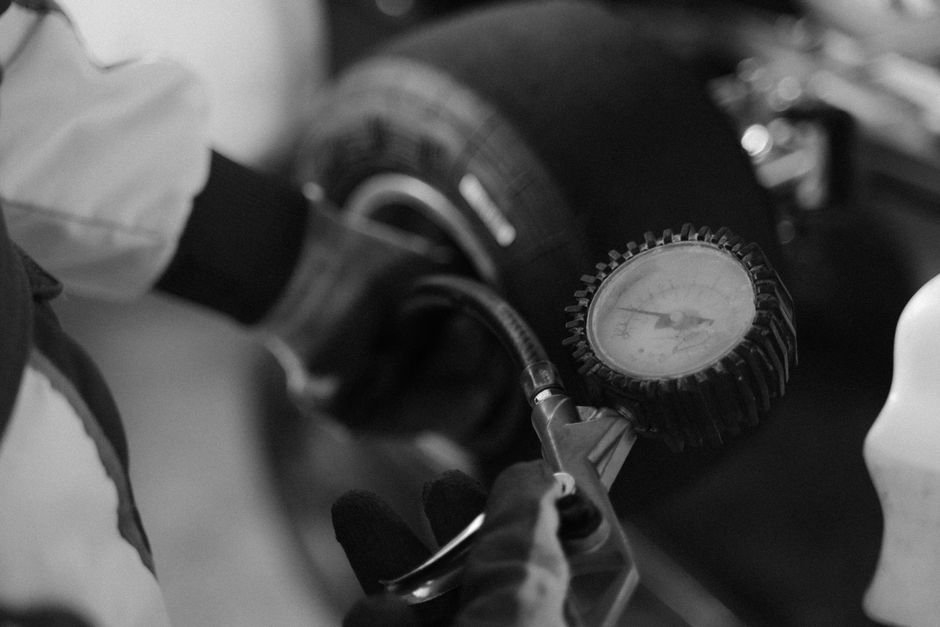
Driving style is another significant variable. Aggressive corner entry, heavy braking, and high slip angles generate more heat. Smooth driving tends to produce more even and controllable temperature distribution. Tire pressure directly influences the contact patch size and internal heat generation. Higher pressures reduce the contact patch and can lead to higher center temperatures, while lower pressures increase flexing and heat buildup. Teams adjust pressures based on real-time temperature data to keep each tire within its window.
Suspension geometry, specifically camber and toe settings, also affects how heat builds across the tire width. Excessive camber can cause the inner edge to overheat while the outer edge remains cold. Spending time to set up the car to promote even thermal distribution is a common part of endurance race preparation. Track layout, number of turns, and surface abrasiveness further influence the rate at which tires gain and lose heat. By analyzing all these factors, teams can develop a tire management plan tailored to each race.
Monitoring and Managing Tire Temperature During a Stint
In endurance racing, continuous monitoring of tire temperature is essential. Most teams use infrared sensors mounted on the car or handheld pyrometers during pit stops to measure tread and sidewall temperatures. These measurements are taken at multiple points across the tire surface to identify thermal gradients. Data from these readings helps engineers decide whether to adjust pressures, change compounds, or modify the driving line.
Managing tire temperature over a long stint involves both proactive and reactive strategies. Proactive measures include using tire warmers before the race to bring tires to their optimal window from the start. During a stint, drivers may alter their braking points or corner entry speeds to cool or heat the tires as needed. If a tire is overheating, reducing slip angle and lifting off the throttle earlier can help. If it is too cold, slightly more aggressive inputs may generate additional heat, but this must be done carefully to avoid overheating other areas.
Another approach is to include tire temperature data in the overall race strategy. For example, if a stint is expected to be long, teams may opt for a harder compound that takes longer to reach its window but can sustain performance over many laps. They may also schedule pit stops not only for fuel but also to change tires before they fall out of the optimal temperature range. No single method guarantees perfect temperature control, but combining careful observation, data analysis, and adaptive driving creates a more predictable tire behavior across the duration of an endurance race.